Shaker
A recessed center panel framed by straight rails and stiles gives a quiet, framed look.
 MEADRENOVATIONS LLC
Explore cabinet styles, surfaces, flooring, trim, and the small finishing choices that bring a room together. Open an example to see what to look for—and what to discuss.
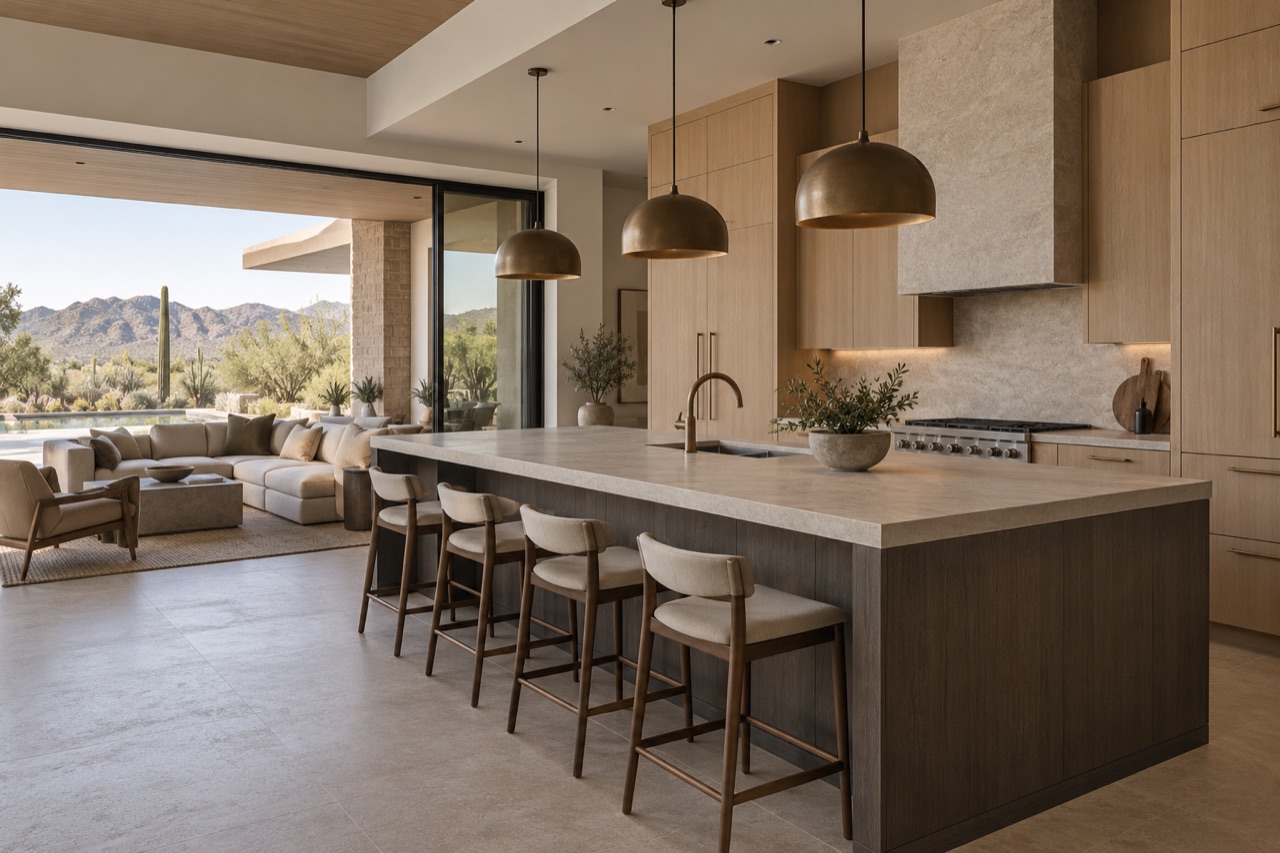
94 examples across the library
Start with the shape of the cabinet door, then compare finishes, the visible gaps between fronts (reveals), and how drawers and end panels line up.
Ask about these detailsAsk to see a door sample, the drawer-front arrangement, and the finish of exposed cabinet ends.
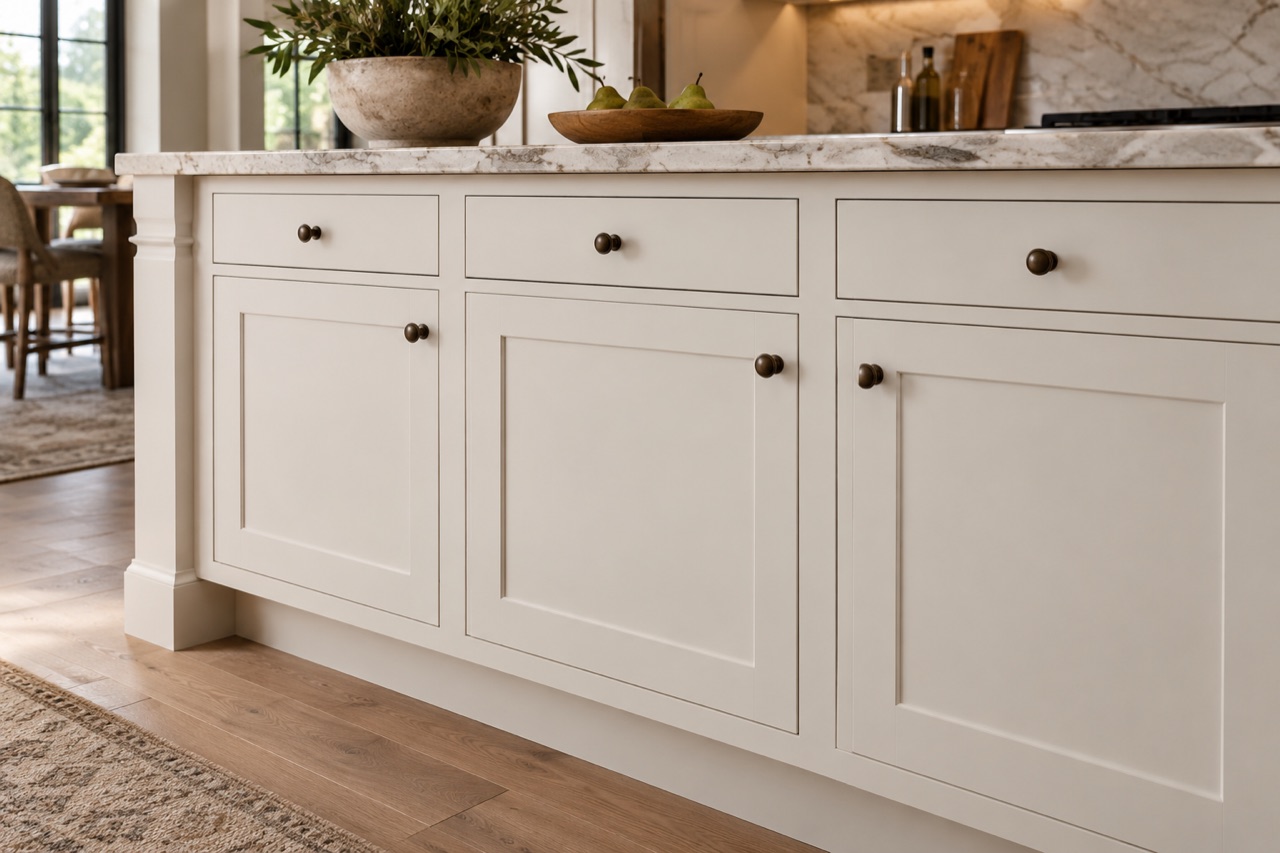
A recessed center panel framed by straight rails and stiles gives a quiet, framed look.
An uninterrupted face emphasizes color, grain, and clean alignments.
A shaped center panel adds shadow and a more traditional layer of detail.
A framed door sits within the face frame, creating a precise grid of narrow reveals.
Narrow rails and stiles bring a finer framed outline to a recessed-panel door.
Closely spaced vertical flutes add texture and a changing pattern of light and shadow.
Glass-front doors put dishes and display pieces on view within a framed cabinet.
A wall-hung vanity leaves a clear floor line and emphasizes the cabinet as a single volume.
Legs, a defined frame, and an open lower shelf give a vanity a furniture-like character.
Compare the material as well as its pattern. Natural stone, engineered quartz, porcelain, and wood can create very different surfaces—and need different fabrication and care.
Ask about these detailsReview full slabs or large samples, seam locations, edge profiles, sink cutouts, care, and the installed scope.
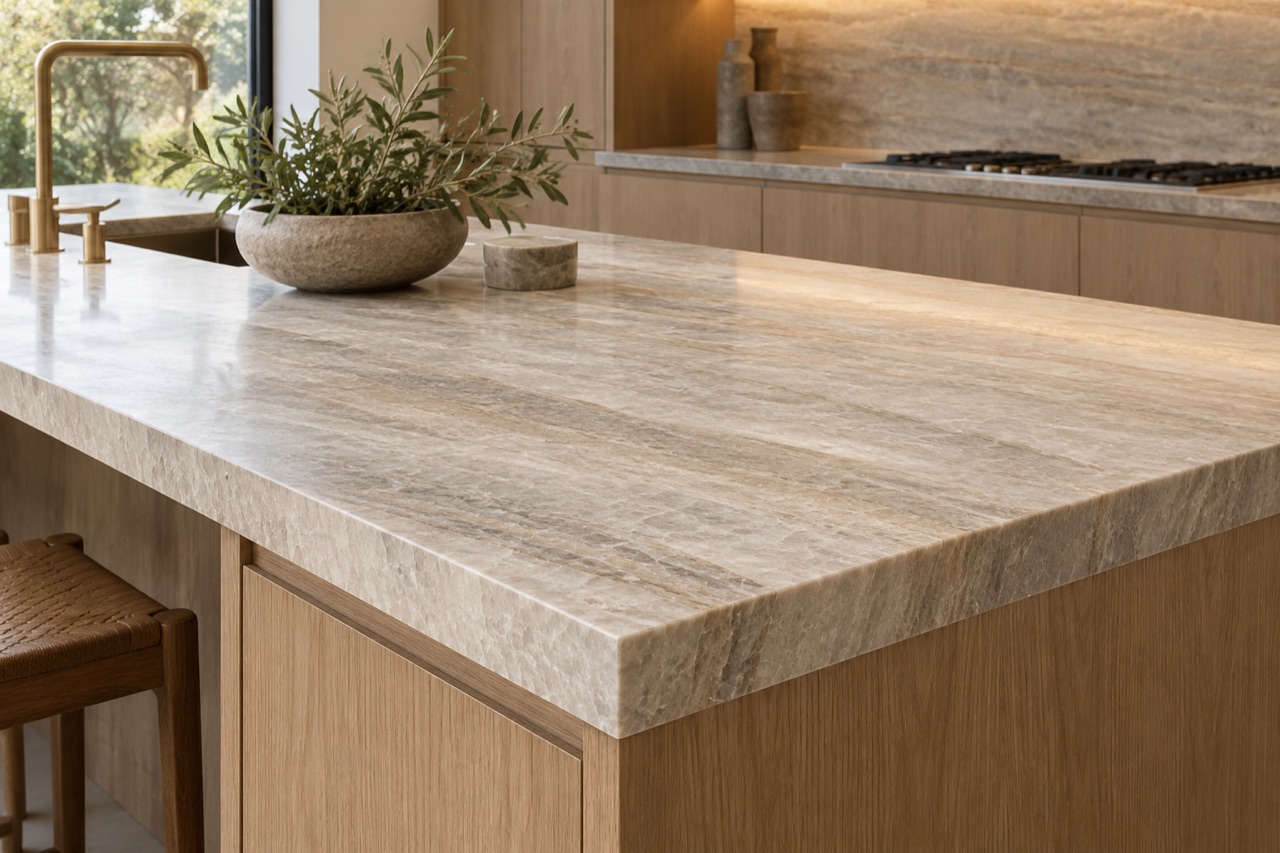
A subtle mineral pattern pairs well with wood that has a more prominent grain.
Natural veining and a softer, low-gloss finish bring a distinctly tactile character to a work surface.
Rich grain and a warm touch can make an island or pantry surface feel like a carefully made piece of furniture.
Subtle crystalline movement and long mineral lines can give a pale stone surface depth without an overly busy pattern.
Visible mineral crystals create a different kind of pattern from the flowing veins of marble. Quiet, dark selections can feel very restrained.
Charcoal tones and subtle mineral veins add depth and contrast to a kitchen.
Porcelain slabs offer a stone-like look with their own material properties and edge details.
A smooth, continuous-looking countertop can pair with an integrated basin for a simple, uncluttered look.
A cast surface brings mineral variation, subtle pores, and a substantial handmade appearance.
A brushed metal surface gives a kitchen a crisp, purposeful working character.
The same tile changes character with its orientation, grout color, and the way cuts meet corners. Choose the layout alongside the tile, rather than after it arrives.
Ask about these detailsReview a layout drawing or dry layout, corner treatment, exposed edges, grout, and product suitability for each location.
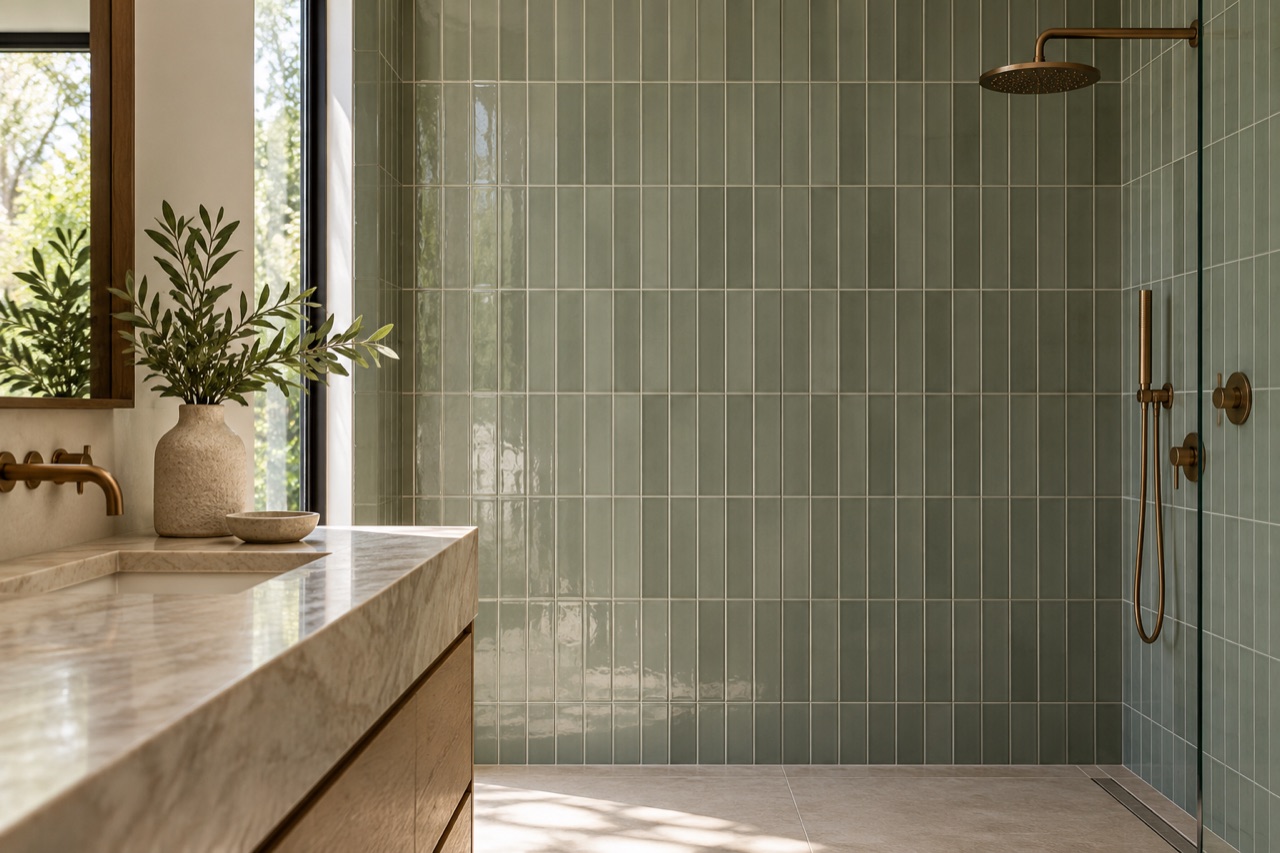
Offset rectangular tiles create a familiar, layered rhythm.
Aligned joints and upright rectangles create a more linear, contemporary feel.
Larger tiles create broad areas of color with fewer visible joints.
Rectangular tiles meet at right angles to create a repeating zigzag pattern.
Soft surface variation and a square module create a lively, less uniform wall.
An elongated six-sided tile makes a pointed repeating pattern with a distinct direction.
Small six-sided pieces add a fine geometric texture without requiring a large motif.
Pale marble pieces and small dark accents create a tailored geometric floor pattern.
Alternating squares establish a strong, orderly rhythm across a floor or wall.
Look at direction and scale as well as color. A floor connects rooms, and its thickness affects door clearances, baseboards, and the transition to retained flooring.
Ask about these detailsCompare samples in the home and confirm substrate preparation, moisture requirements, transitions, and the complete floor build-up.
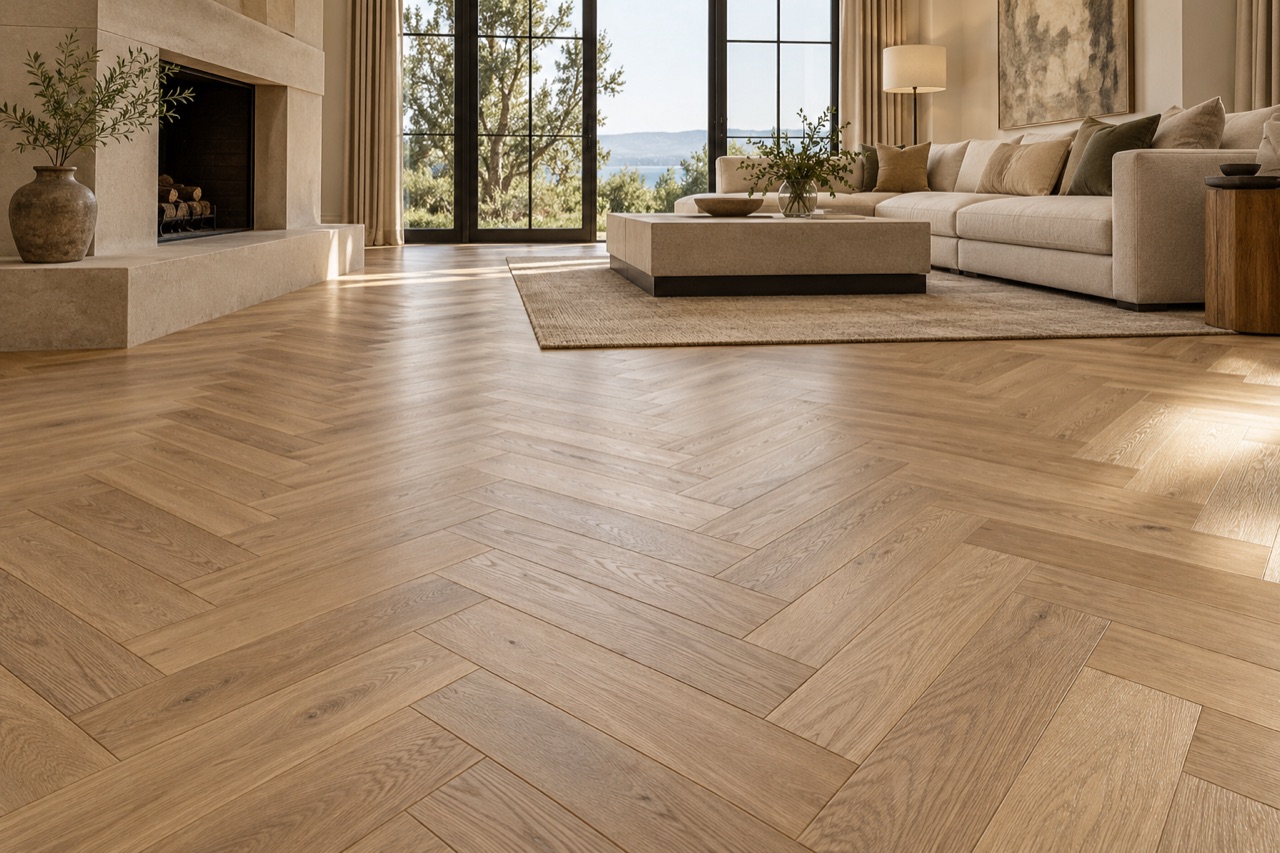
Long, parallel boards give the room a clear direction while genuine wood grain brings warmth and variation.
Rectangular wood blocks meet at right angles in a repeating interlock. Square block ends distinguish herringbone from a mitered chevron pattern.
Broad tile fields and fine joints can create a calm foundation for a room’s cabinetry, furniture, and light.
Soft mineral variation and subtle pores give natural limestone a quieter character than strongly veined marble.
Plank-shaped tile brings a wood-grain look to a ceramic floor with grout joints.
A continuous-looking mineral floor can show fine aggregate, subtle tonal movement, and deliberate joint lines.
Deep brown tones and flowing grain give the floor a rich, warm appearance.
Modular stone pieces introduce a softer mineral texture and a more varied joint rhythm.
Stone chips set into the surface create a speckled pattern that can be subtle or bold.
Compare smooth paint, textured finishes, and patterned paneling. View it in side light, where surface preparation and texture become much more apparent.
Ask about these detailsDiscuss the supporting surface, end conditions, outlets, trim, cleaning, and how the finish will stop at adjacent walls or a soffit.
A simple painted surface keeps attention on proportions, furniture, and light.
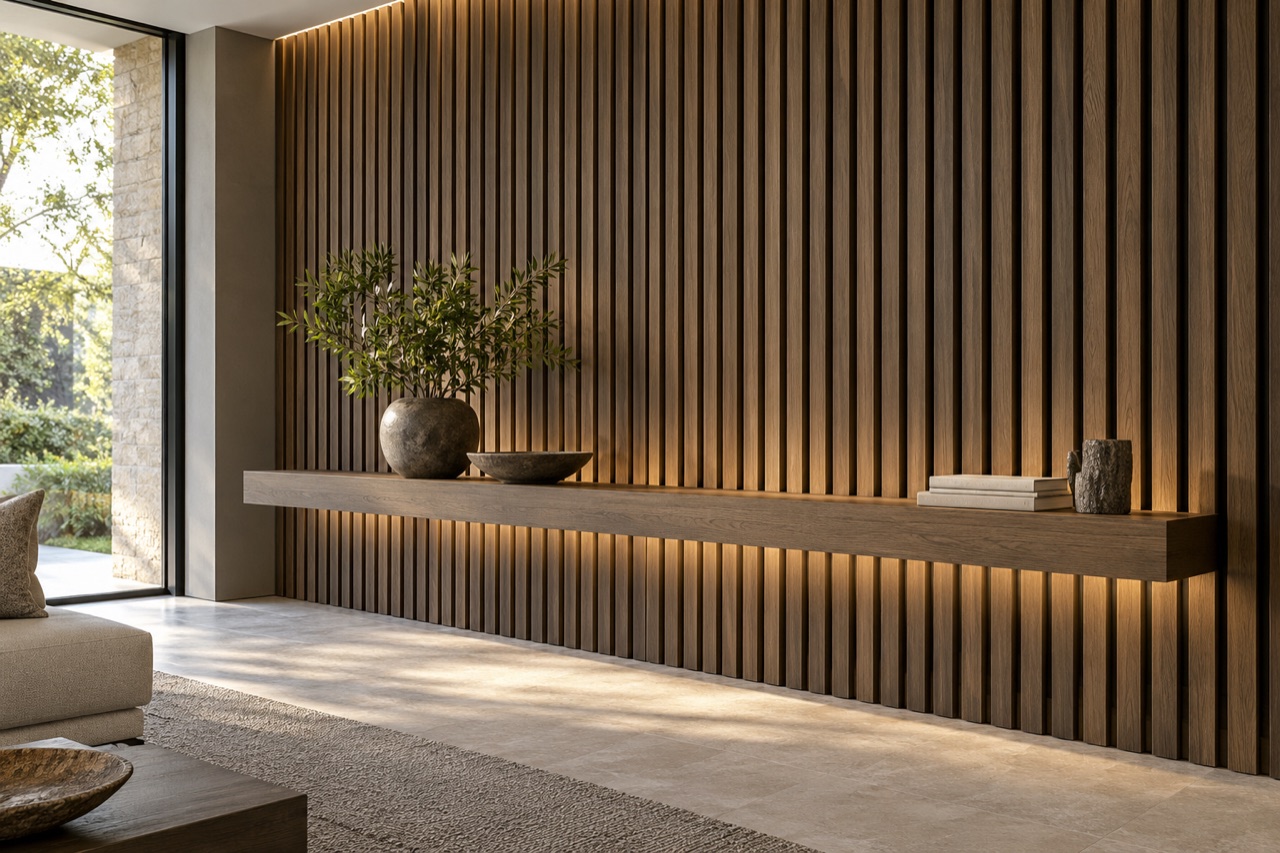
Repeated vertical strips create depth, shadow, and a defined background for shelving or a media wall.
Applied trim divides a wall into framed panels for a more structured look.
A softly clouded mineral appearance gives a wall depth through subtle tonal movement.
A troweled surface brings a smoother mineral depth with a quiet shift in sheen.
Woven natural-looking fibers introduce fine texture and a warmer wall surface.
Large stone pieces bring mineral texture and a measured pattern of joints.
Evenly spaced vertical battens divide the wall into framed sections.
A fine, troweled cement-like finish gives the wall a smooth, continuous-looking surface.
A trim profile is the shape of a molding’s edge. Small changes in height, projection, and shadow can make trim feel contemporary, transitional, or traditional.
Ask about these detailsAsk for a physical profile sample and a corner mockup. Coordinate base, casing, crown, and the details where different profiles meet.
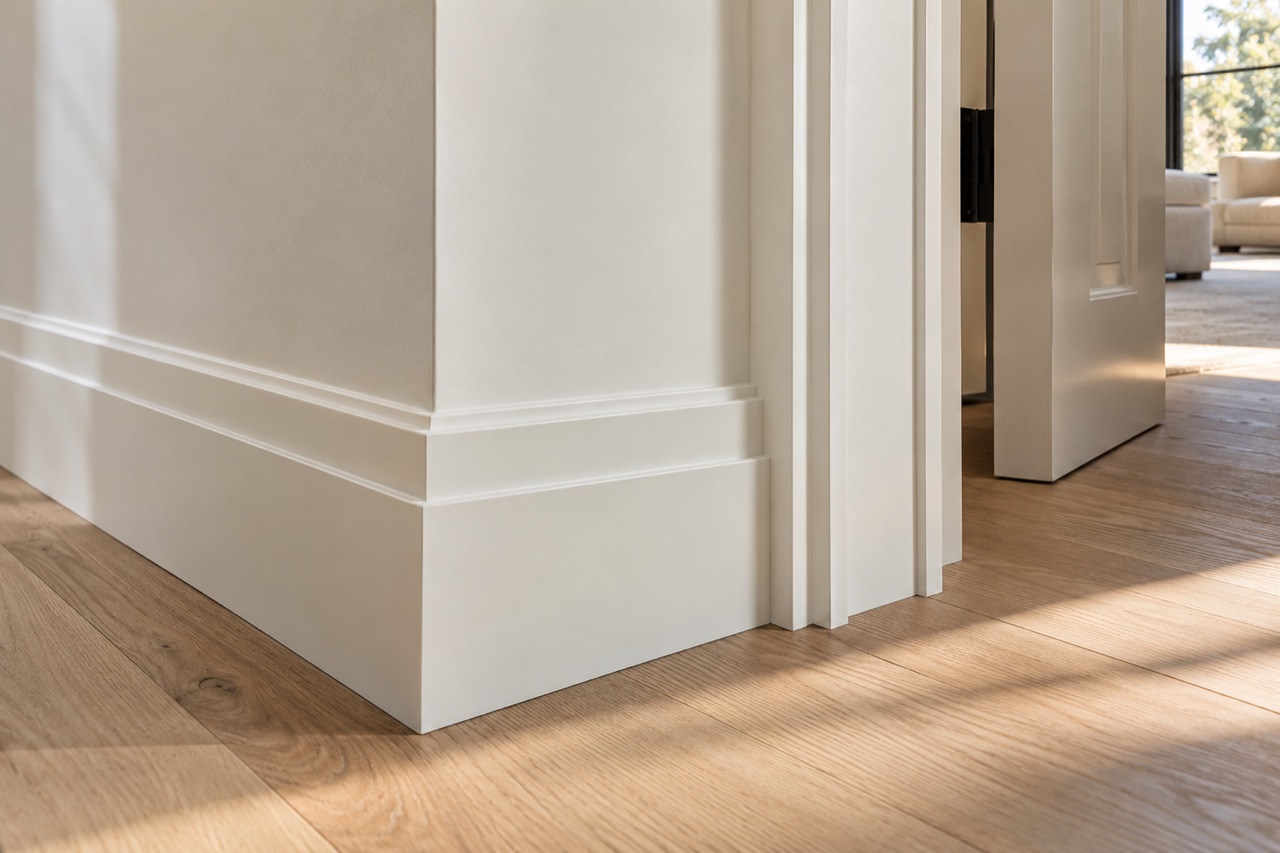
A simple rectangular profile gives a crisp line with restrained shadow.
Two or more flat levels add a little depth without an ornate curve.
A curved, S-shaped detail adds a more traditional highlight and shadow.
A row of small rounded beads adds a fine decorative rhythm to a painted frame.
A small angled face softens an edge while retaining a clean geometric character.
A concave molding makes a gentle transition between wall and ceiling.
A narrow recessed line separates the wall visually from the floor.
A shaped surround follows an arch and emphasizes the opening as an architectural feature.
Parallel grooves give a surround a more decorative vertical rhythm.
Grain, undertone, and sheen work together. A finish sample should be made on the actual wood or substrate proposed for the project.
Ask about these detailsReview a finished sample in daylight and evening light, then record the approved material, grain direction, color, and sheen.
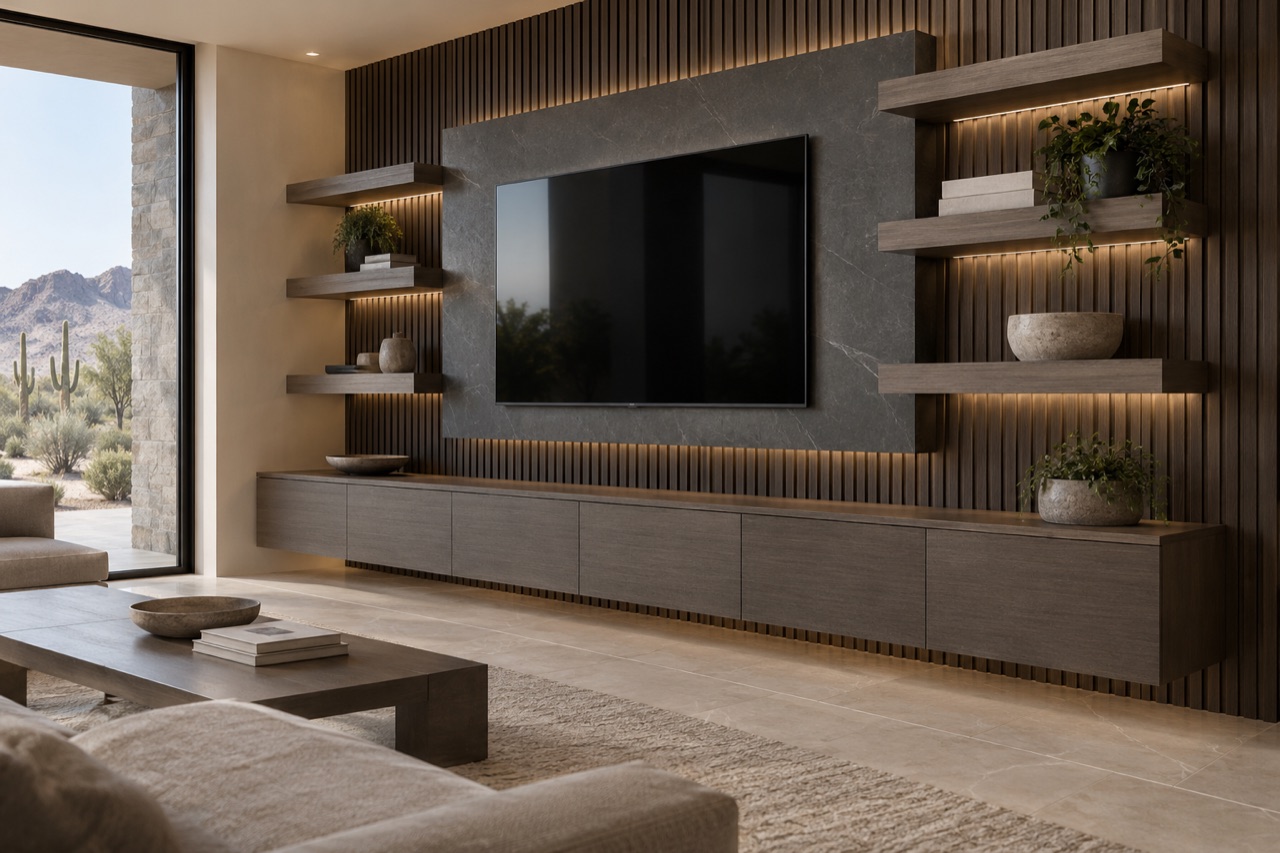
Pale wood tones and visible grain give cabinetry and open shelves a light, warm appearance.
A muted brown with cooler undertones gives wood a more grounded character.
An opaque color gives doors, panels, and shelves a more uniform surface.
Warm brown grain gives shelves and cabinetry a rich, quiet contrast.
Straighter grain creates a consistent linear pattern across doors and panels.
A near-black finish keeps the grain visible while giving wood a stronger silhouette.
A pale washed finish softens the wood color while allowing the grain to remain visible.
Reddish-brown tones give traditional or transitional millwork a warm finish.
A balanced gray-beige painted surface offers a quiet alternative to white or natural wood.
You use hardware every day, so how it feels matters as much as how it looks. Compare shape, grip, projection, and finish alongside the cabinetry and plumbing fixtures.
Ask about these detailsTry a sample in your hand, confirm mounting-hole spacing, and check for interference when nearby doors or drawers open.
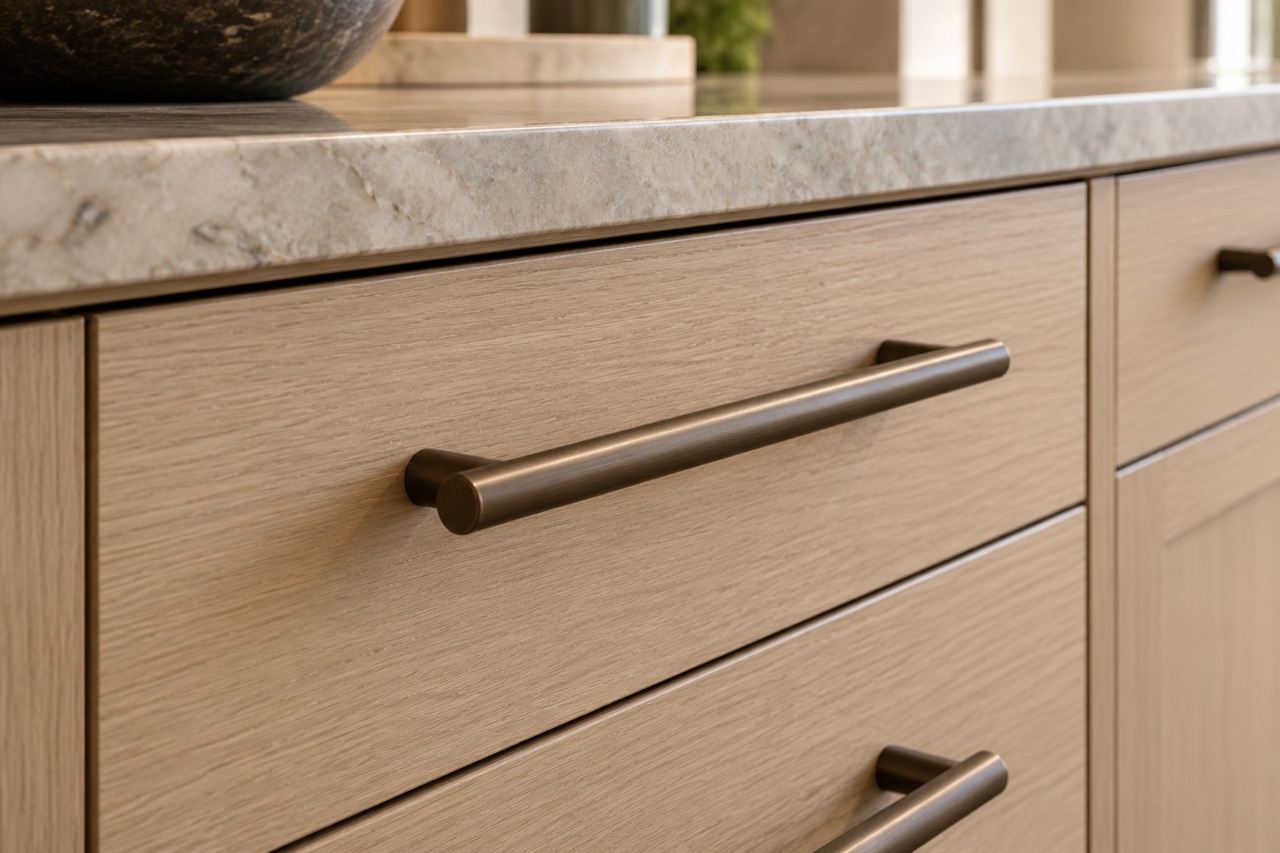
A linear grip works with a wide range of cabinet fronts and can reinforce long drawer lines.
A compact shape can keep smaller doors visually simple and mix with pulls on drawers.
A covered, curved grip brings a more traditional or furniture-like detail to drawers.
A slim pull at the door edge keeps most of the front visually uninterrupted.
A grip set into the face keeps the hardware within a clean cabinet plane.
A flexible leather loop introduces a softer tactile contrast to wood or paint.
A textured cylindrical grip adds a finely detailed accent to a cabinet front.
A wall-mounted fitting clears the counter and makes the spout position part of the composition.
A simple lever handle can match the metal finishes used elsewhere in the room.
Combine lighting for everyday tasks with softer light for atmosphere. The appearance of a finish depends on the daylight, lamp color, and direction of light that reaches it.
Ask about these detailsReview fixture locations, glare, dimming compatibility, color temperature, mirror placement, and access for future maintenance.
A diffused light line beneath cabinetry brings useful illumination directly to a preparation surface.
A restrained suspended line can reinforce the length of an island or dining table without dominating the room.
Vertical light beside a mirror complements overhead illumination and helps balance the light around the vanity.
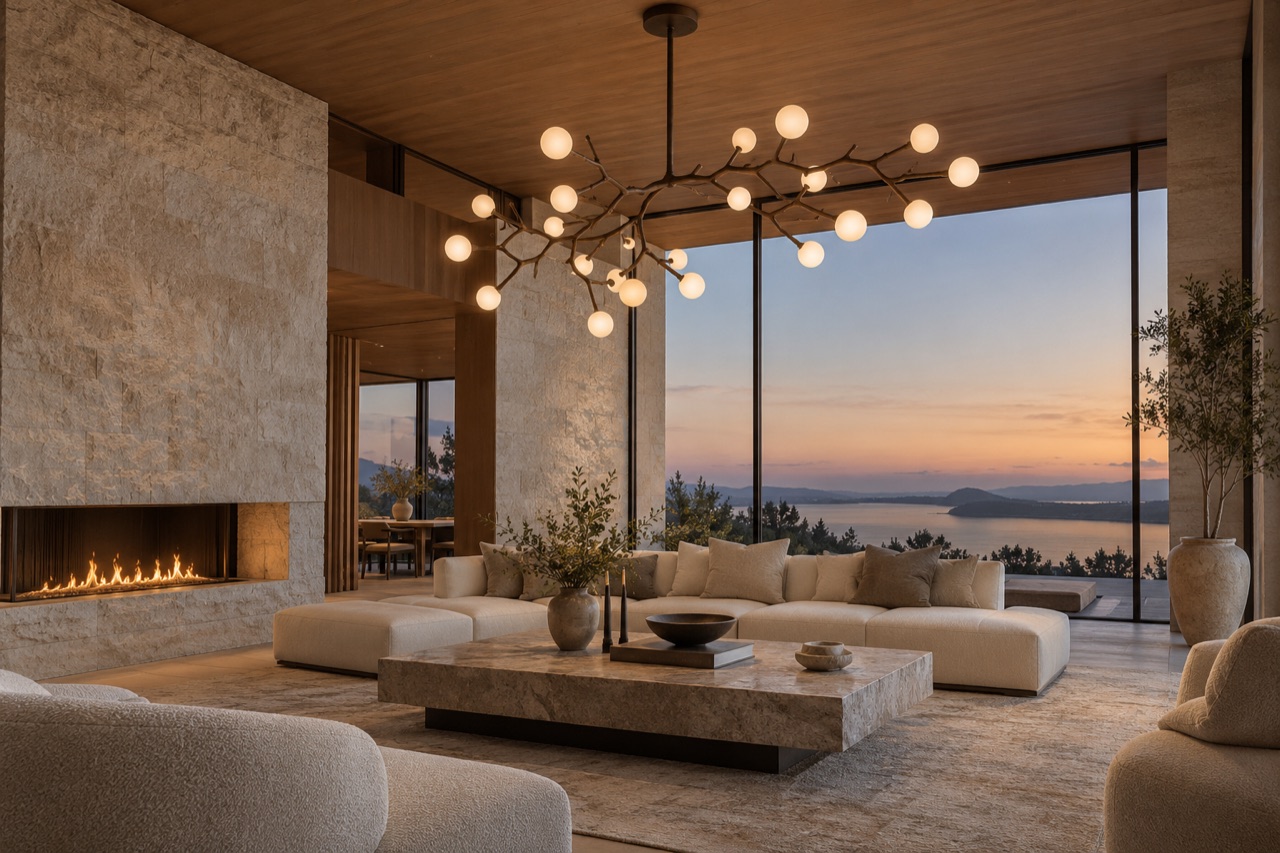
An open, branching fixture can give a living or dining space a focal point without blocking views across the room.
Softly diffused spheres bring a quieter glow and a rounded contrast to crisp cabinetry and stone.
A small wall-mounted light can reveal texture and add a more intimate layer beside doors, mirrors, or architectural features.
A small, carefully detailed ceiling aperture can provide a discreet layer of general or directed illumination.
A concealed light line washes a ceiling or wall to reveal the room’s geometry with a softer indirect glow.
A compact ceiling fixture creates a focal point without hanging far into the room.
A focused fitting above artwork adds a separate layer of illumination.
A gentle arch softens the outline of a bathroom mirror.
Light behind a mirror creates a soft perimeter glow and separates it from the wall.
An addition should connect to the existing home in texture, proportion, and detailing. A close match and an intentional contrast are both directions to explore.
Ask about these detailsReview finish samples on site, existing weathering, flashing and drainage details, opening dimensions, and any energy or approval requirements with the appropriate project professionals.
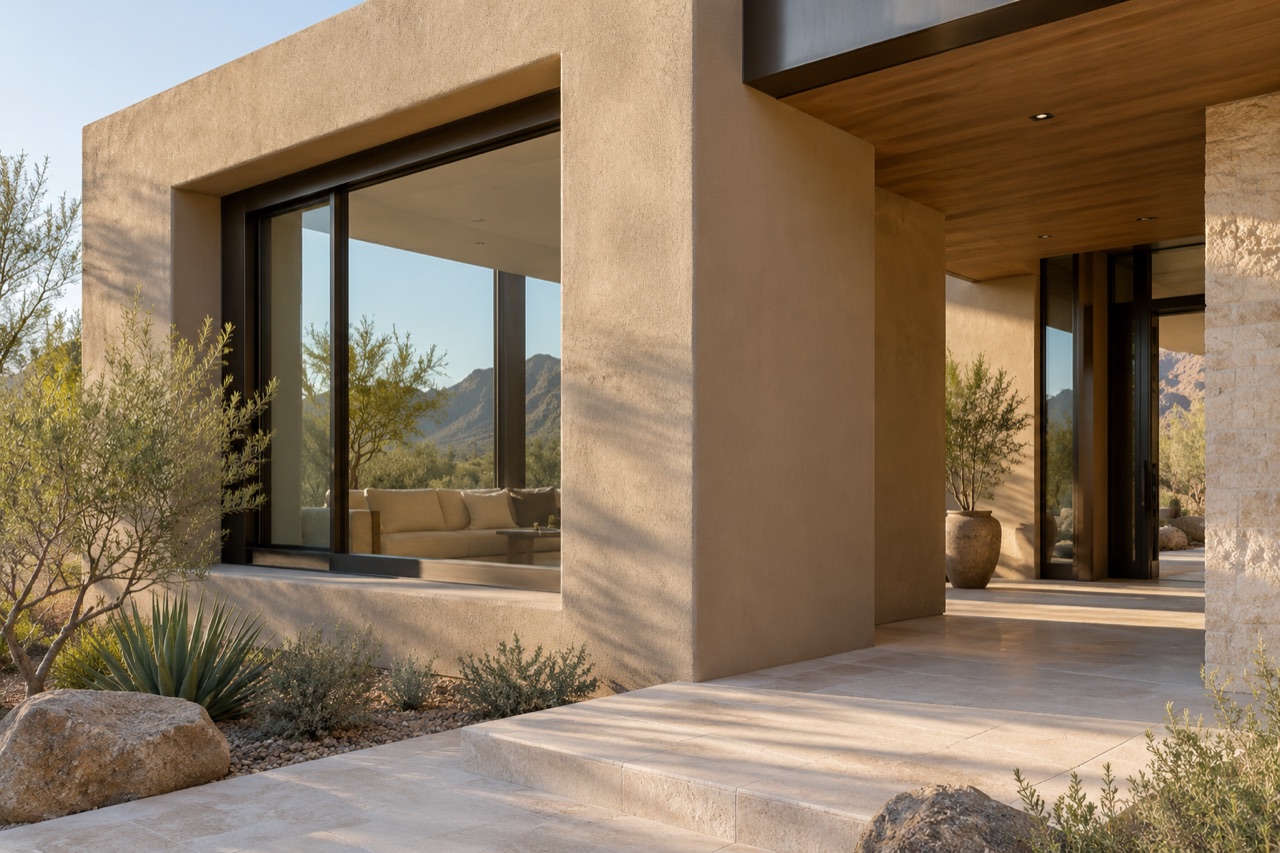
A stucco-like finish can connect new walls with the texture already on the home.
Restrained trim puts emphasis on the window or door and the surrounding wall.
A projecting trim or band adds shadow around an opening and defines its relationship to the wall.
A pale stone facing brings mineral texture and a more substantial wall character.
A modular brick pattern adds texture and a clear rhythm to an exterior wall.
Alternating wide boards and narrow battens give an exterior a strong vertical rhythm.
Wood beneath an overhang can bring warmth to an otherwise restrained exterior.
A broad glazed opening can create a lighter visual connection between inside and outside.
A curved opening can bring a quieter traditional note to a contemporary material palette.
Save the names of the examples you like, plus a note about why: the narrow frame, quiet grain, soft sheen, or line of a handle. Add room photos and any finishes you want to keep to your project inquiry.
Share your favoritesCompare samples together in the home. Discuss care, lead times, allowances, installation requirements, edges, and transitions. For a more detailed or higher-end finish, ask what suitable options can be sourced and how they affect the cost and installation.
Images in this guide are AI-generated design concepts, not completed Mead projects or exact product samples. Materials, dimensions, finish, suitability, pricing, and availability are confirmed for your project. Review physical samples before selecting.
Tell us which shapes, textures, and finish combinations appeal to you. We can work through samples, drawings, and the decisions needed for your home.